
If you’ve noticed white spots on your faucets, cloudy glassware, soap scum in the shower, or mineral buildup around your showerheads, you’re not imagining things. Brighton, Michigan has very hard water.
Hard water is common throughout Michigan, but the Brighton area has particularly high mineral levels. While hard water generally isn’t considered a health concern, it can create plenty of headaches around your home—from crusty faucets and dry-feeling dishes to reduced efficiency and premature wear on water heaters and plumbing fixtures.
Here’s what Brighton homeowners should know about hard water, how to recognize the signs, and what you can do about it.
How Hard Is the Water in Brighton, Michigan?
Water hardness is primarily caused by naturally occurring minerals—especially calcium and magnesium—that dissolve into groundwater.
Water hardness is commonly measured in either milligrams per liter (mg/L) or grains per gallon (GPG).
The City of Brighton has reported its water hardness at approximately 25–27 grains per gallon.
That’s very hard water.
For perspective, water above roughly 14–15 grains per gallon is generally considered very hard. At 25–27 grains, Brighton homeowners can experience substantial mineral buildup if their water isn’t softened.
And the issue isn’t limited to homes connected to Brighton’s municipal water system. Groundwater throughout Livingston County is generally considered hard to very hard, which means homeowners with private wells may experience similar issues.
The exact hardness of your home’s water can vary depending on your water source and location, so testing your home’s water is the best way to know exactly what you’re dealing with.
What Causes Brighton’s Hard Water?
Hard water starts long before water reaches your faucet.
As groundwater moves through soil, rock, and underground geological formations, it dissolves naturally occurring minerals. Calcium and magnesium are two of the primary minerals responsible for water hardness.
Those minerals remain dissolved in the water as it enters your home’s plumbing system.
The water itself may look perfectly clear, but once it’s heated, evaporates, or dries on a surface, those minerals can leave deposits behind.
That’s where many of the problems begin.
7 Signs You May Have Hard Water
Brighton’s water is already known to be hard, but your home may be giving you some additional clues.
1. White Buildup Around Faucets
One of the easiest signs to spot is a white, chalky material around faucets, showerheads, and other fixtures.
These deposits are minerals left behind as water evaporates.
You may clean them away only to see them return shortly afterward.
2. Spots on Dishes and Glassware
Do glasses come out of your dishwasher looking cloudy or covered in spots?
Hard water minerals can remain behind after the water dries, creating visible deposits on dishes, silverware, and glassware.
3. Soap Doesn’t Lather Well
Hard water can make it more difficult for soaps and detergents to work effectively.
You may find yourself using more shampoo, dish soap, laundry detergent, or body wash to achieve the same results you’d get with softer water.
4. Soap Scum Around Showers and Tubs
Those same minerals can interact with soap and create residue on shower doors, tile, tubs, and fixtures.
If you’re constantly battling soap scum in your bathroom, hard water may be contributing to the problem.
5. Reduced Water Flow
Mineral deposits can accumulate inside faucet aerators and showerheads.
As those openings become restricted, you may notice weaker water flow.
Cleaning or replacing the fixture can temporarily solve the problem, but the buildup may return if the underlying hard water isn’t addressed.
6. Problems With Your Water Heater
Your water heater is one of the appliances most affected by hard water.
As water is heated, minerals can separate from the water and accumulate as sediment inside a traditional water heater tank.
Over time, that sediment can reduce efficiency, create popping or rumbling noises, and make the water heater work harder to heat your water.
Tankless water heaters aren’t immune either. Mineral scale can accumulate within their internal components and heat exchangers, making proper maintenance especially important in hard-water areas like Brighton.
7. Frequent Scale on Plumbing Fixtures
If you’re constantly replacing showerheads, cleaning faucet aerators, or removing mineral deposits from fixtures, your water hardness may be the underlying cause.
Treating the water itself can often be more effective than continually treating the symptoms.
Can Hard Water Damage Your Plumbing?
Hard water doesn’t usually destroy a plumbing system overnight.
The bigger concern is what can happen gradually.
Mineral deposits can build up on fixtures, inside appliances, and within components that regularly heat or handle water.
Your water heater can be especially vulnerable because heating hard water encourages mineral scale and sediment formation.
Hard water may contribute to:
- Scale buildup on faucets and showerheads
- Reduced fixture performance
- Sediment accumulation in water heaters
- Reduced water-heating efficiency
- Additional maintenance requirements
- Shortened lifespan of certain plumbing fixtures and appliances
Think of it as a long-term maintenance issue rather than an immediate plumbing emergency.
Is Brighton’s Hard Water Safe to Drink?
It’s important to distinguish water hardness from water safety.
Hardness primarily refers to the concentration of minerals such as calcium and magnesium in the water. Having hard water doesn’t automatically mean that your water is unsafe to drink.
In fact, calcium and magnesium are naturally occurring minerals.
Hardness is primarily a nuisance and plumbing concern because of the scale, residue, and buildup those minerals can create.
Water-quality concerns involving bacteria, lead, PFAS, nitrates, or other contaminants are separate issues and require appropriate water testing.
If you’re concerned about the quality of water coming from a private well, testing can provide a much clearer picture of what’s actually in your water.
Do Brighton Homes Need Water Softeners?
With water hardness around 25–27 grains per gallon in Brighton’s municipal system, it’s easy to understand why water softeners are common in the area.
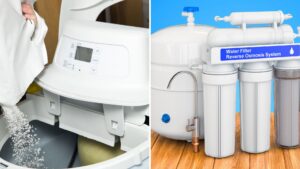
A traditional water softener typically uses an ion-exchange process to remove hardness minerals such as calcium and magnesium.
For homeowners experiencing significant hard-water problems, properly treated water can help reduce:
- White mineral deposits
- Scale on faucets and fixtures
- Soap scum
- Spots on dishes and glassware
- Mineral buildup inside water-using equipment
A properly sized and configured system is important.
Setting a water softener incorrectly can cause unnecessary salt and water usage or leave your water harder than desired. The system should be configured according to your home’s actual water hardness and household water usage.
What About Homes With Well Water?
Many properties outside Brighton’s municipal water service rely on private wells.
Well-water conditions can vary significantly from one property to another, even within the same general area.
In addition to hardness, well water can sometimes contain elevated levels of iron or other naturally occurring minerals that affect taste, odor, staining, and plumbing fixtures.
That’s why it’s especially helpful to test well water before choosing treatment equipment.
Rather than assuming every home needs the same system, water treatment should be based on what’s actually present in your water.
How Can You Protect Your Plumbing From Hard Water?
If you’re dealing with Brighton’s hard water, there are several steps that can help protect your plumbing and appliances.
Regularly clean faucet aerators and showerheads to remove scale. Follow your water heater manufacturer’s recommended maintenance schedule, which may include flushing sediment from a tank-style water heater.
If you have a tankless water heater, periodic descaling may be necessary depending on the manufacturer’s recommendations and your water conditions.
Most importantly, consider having your water hardness evaluated and determining whether a water softener or other treatment system makes sense for your home.
Need Help With Hard Water in Brighton, Michigan?
Hard water is a fact of life for many Brighton and Livingston County homeowners, but that doesn’t mean you have to live with constant scale, cloudy dishes, and mineral buildup.
At Mission Ready Plumbing, we can help evaluate your home’s water and plumbing system, identify hard-water-related problems, and recommend solutions based on your home’s actual needs.
Whether you’re concerned about your water heater, plumbing fixtures, water quality, or you’re considering a water softener or water treatment system, getting the right solution starts with understanding your water.
If you’re experiencing hard water problems in Brighton, Michigan or the surrounding communities, contact Mission Ready Plumbing to schedule service.
Your plumbing problem is our mission.
Frequently Asked Questions
How hard is the water in Brighton, MI?
Brighton’s municipal water has been reported at approximately 25 to 27 grains per gallon, which is considered very hard. Anything above roughly 14 to 15 grains per gallon is generally classified as very hard, so Brighton falls well into that range.
Is Brighton’s hard water safe to drink?
Yes, water hardness is separate from water safety. Calcium and magnesium, the minerals that cause hardness, are naturally occurring and not a health concern. Hardness is mainly a nuisance and plumbing issue because of the scale and residue it leaves behind, not a drinking water safety issue.
What are the signs of hard water in a home?
Common signs include white buildup around faucets, spotty dishes and glassware, soap that doesn’t lather well, soap scum in the shower, and reduced water flow from clogged fixtures. Water heater issues, like popping noises or reduced efficiency, are also a common sign of hard water buildup.
Does hard water damage water heaters?
Yes, heating hard water encourages mineral scale and sediment to form inside the tank, which can reduce efficiency and create noises like popping or rumbling. Tankless water heaters aren’t immune either, since scale can build up on internal components and heat exchangers over time.
Do homes with well water in the Brighton area also have hard water?
Often, yes. Groundwater throughout Livingston County is generally considered hard to very hard, so private wells can experience similar issues to Brighton’s municipal system. Well water can also contain other minerals like iron, which is why testing is the best way to know exactly what’s in your water.
Mission Ready Plumbing is a veteran owned and operated Plumbing Company with over 25 years of experience. We serve Southeast Michigan, including Livingston County, Ingham County, Shiawassee County, and more. For a complete list of our service area, visit our service area page here.