
When it’s time to replace your water heater, one of the biggest decisions is whether to install another traditional tank-style water heater or upgrade to a tankless system.
Both can provide reliable hot water, but they work very differently. The best choice for your Michigan home depends on your household’s hot water demand, available space, budget, energy goals, and existing plumbing and utility setup.
Michigan homeowners also have to consider something homeowners in warmer climates may not think about as much: cold incoming water temperatures during the winter. That can affect how hard a water heater needs to work and is particularly important when choosing the right size tankless system.
At Mission Ready Plumbing, we help homeowners in Brighton, MI and surrounding communities determine which water heating system makes the most sense for their home. Here’s what you should know before deciding between a tankless and traditional water heater.
How Does a Traditional Water Heater Work?
Traditional water heaters store hot water in an insulated tank. Residential tanks commonly hold approximately 40 to 80 gallons of water, depending on the size of the system and the needs of the household.
The water heater continuously maintains the stored water at the desired temperature. When someone turns on a shower, faucet, dishwasher, or washing machine, hot water leaves the tank and is replaced with cold water.
The system then heats the incoming water so it’s ready for the next use.
Traditional tank water heaters are common because they’re relatively simple, dependable, and typically cost less to install than tankless systems.
The biggest limitation is capacity. Once you’ve used most of the hot water stored in the tank, you’ll need to wait for the system to heat another supply.
How Does a Tankless Water Heater Work?
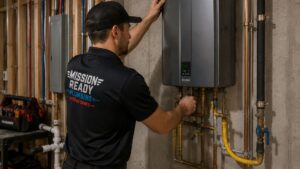
A tankless water heater doesn’t maintain a large reservoir of hot water.
Instead, it heats water as you need it.
When you turn on a hot water faucet, cold water travels through the tankless unit where a powerful heating element or burner rapidly heats it before sending it to your faucet, shower, or appliance.
Because there isn’t a limited tank of stored hot water, a properly sized tankless water heater can provide a continuous supply of hot water.
That’s one of the biggest reasons homeowners consider making the switch.
Tankless Water Heater Advantages
Continuous Hot Water
For many families, this is the biggest benefit.
If your household frequently runs out of hot water because multiple people are showering, doing laundry, or running appliances around the same time, a tankless system can be a major upgrade.
Instead of relying on 40 or 50 gallons of stored hot water, the system continues heating water as long as demand remains within its capacity.
Better Energy Efficiency
Traditional water heaters can experience what’s known as standby heat loss because they maintain the temperature of stored water even when nobody is using it.
Tankless systems heat water only when there is demand.
Depending on your household’s water usage and the equipment installed, that can reduce the amount of energy used for water heating.
Smaller Footprint
Traditional water heaters require enough room for a large storage tank.
Tankless units are much more compact and are generally mounted on a wall, which can free up valuable floor space in a basement, mechanical room, utility room, or other area.
Longer Potential Lifespan
A quality tankless water heater that is properly installed and maintained can often provide a longer service life than a traditional tank-style system.
That longer lifespan can help offset some of the additional upfront cost.
Tankless Water Heater Disadvantages
Tankless isn’t automatically the right choice for every home.
Higher Initial Cost
Tankless systems generally cost more upfront than traditional water heaters.
The unit itself may be more expensive, and converting from a tank to tankless can require additional work.
Depending on your home’s existing setup, installation could require modifications to gas lines, electrical service, venting, plumbing, or other components.
That’s why it’s important to have the installation evaluated before comparing prices based solely on the cost of the equipment.
Proper Sizing Is Extremely Important
Tankless water heaters don’t run out of stored hot water—but they do have maximum flow rates.
If several showers, faucets, and appliances demand hot water simultaneously, an undersized unit may struggle to keep up.
This becomes especially important in Michigan.
During colder months, the water entering your home can be significantly colder than it is during summer. Your tankless system must raise that incoming water to the desired hot water temperature while maintaining adequate flow.
The greater the temperature increase required, the harder the system has to work.
Proper sizing for Michigan conditions is critical.
Maintenance Still Matters
Tankless doesn’t mean maintenance-free.
Mineral deposits can accumulate inside the heat exchanger over time, particularly in homes with hard water. Periodic flushing and maintenance can help protect the system’s performance and longevity.
Traditional Water Heater Advantages
Tank-style water heaters remain a great option for many Michigan homes.
Lower Upfront Cost
In many cases, replacing an existing tank-style water heater with a similar unit is less expensive than converting to tankless.
If the existing gas, electrical, venting, and plumbing connections are suitable, installation can also be relatively straightforward.
Proven and Familiar Technology
Traditional water heaters have been used in homes for decades.
They’re widely available, relatively simple to service, and available in many different sizes and efficiency levels.
Handles Short Periods of High Demand Well
A properly sized tank provides a ready supply of hot water.
For households that use large amounts of hot water for relatively short periods—and then allow the heater time to recover—a traditional tank can perform very well.
Traditional Water Heater Disadvantages
The most obvious disadvantage is limited hot water.
Once the stored hot water has been depleted, you’ll need to wait for the heater to recover.
Traditional systems also require more physical space and can consume energy maintaining the temperature of stored water.
Another consideration is the tank itself.
As a water heater ages, corrosion and deterioration can eventually lead to leaks. A leaking tank can potentially cause significant water damage, especially if the unit is installed in a finished basement or other vulnerable area.
Which Water Heater Is Better for Michigan Homes?
There isn’t one answer that applies to every homeowner.
A tankless water heater may be the better choice if you:
- Frequently run out of hot water.
- Have a larger household.
- Want continuous hot water.
- Want to improve energy efficiency.
- Need to free up floor space.
- Plan to remain in your home long enough to benefit from the system’s potential longevity.
A traditional water heater may make more sense if you:
- Want to minimize upfront replacement cost.
- Rarely run out of hot water.
- Already have a tank system that meets your household’s needs.
- Want a relatively straightforward replacement.
- Don’t want to make additional plumbing, gas, venting, or electrical modifications.
The important thing is to compare the complete system and installation, not simply the price printed on the water heater.
Don’t Forget About Michigan’s Cold Winters
When evaluating a tankless water heater in Michigan, winter performance should be part of the conversation.
A tankless unit installed in a warmer part of the country may not need to raise the incoming water temperature nearly as much as one installed in Brighton.
That means sizing a system based solely on household size isn’t enough.
Your plumber should consider expected hot water demand, incoming water temperature, desired output temperature, available fuel or electrical capacity, and how many fixtures may be used simultaneously.
Choosing the right system from the beginning can make a significant difference in performance and homeowner satisfaction.
Need a New Water Heater in Michigan?
Whether you’re replacing a failed water heater or considering an upgrade to tankless, the best option depends on your home and how your family actually uses hot water.
At Mission Ready Plumbing, we can evaluate your existing system, discuss your hot water needs, and help you compare traditional and tankless options.
We’ll help you choose a system that’s properly sized for your home and Michigan’s climate—not simply whichever water heater happens to be sitting on the shelf.
If you’re considering water heater replacement or tankless water heater installation in Brighton, MI or the surrounding communities, contact Mission Ready Plumbing to schedule an evaluation.
Your plumbing problem is our mission.
Frequently Asked Questions
What’s the main difference between a tankless and traditional water heater?
A traditional water heater stores and maintains a set amount of hot water in a tank, while a tankless system heats water on demand as you use it. This means a properly sized tankless unit can provide a continuous supply of hot water, while a traditional tank has a limited supply before it needs time to recover.
Why does Michigan’s climate matter when choosing a tankless water heater?
Incoming water is significantly colder during Michigan winters, which means a tankless system has to work harder to raise it to the desired temperature. Proper sizing needs to account for this colder incoming water, not just household size, or the system may struggle to keep up with demand.
Are tankless water heaters more energy efficient than traditional ones?
Generally, yes. Traditional water heaters experience standby heat loss from maintaining stored water at temperature even when it’s not being used. Tankless systems only heat water when there’s demand, which can reduce overall energy usage depending on household habits.
Do tankless water heaters require maintenance?
Yes, tankless doesn’t mean maintenance-free. Mineral deposits can build up inside the heat exchanger over time, especially in homes with hard water. Periodic flushing and maintenance help protect the system’s performance and longevity.
Is a tankless water heater worth the higher upfront cost?
It depends on your household’s hot water needs and how long you plan to stay in your home. Tankless systems tend to have a longer lifespan and can offset some of the additional cost over time, while a traditional tank is often the more straightforward and affordable choice for households that rarely run out of hot water.
Mission Ready Plumbing is a veteran owned and operated Plumbing Company with over 25 years of experience. We serve Southeast Michigan, including Livingston County, Jackson County, Genesee County, and more. For a complete list of our service area, visit our service area page here.